.png?width=150&height=61&name=explori_logo%20(1).png)
Unlocking Event Success: A Comprehensive Approach with Explori
 Hennah Hussain
·
2 minute read
Hennah Hussain
·
2 minute read
Defining success goes far beyond just a single metric. Event organizers often rely on tools like Net Promoter Score (NPS) to measure attendee satisfaction, but is that really enough to gauge the true success of an event? Success should be approached through a combination of metrics, benchmarking and long-term data analysis; all of which offer deeper insights into event performance.
The Need for Data-Driven Event Success
While traditional performance indicators like NPS can offer valuable insights, they represent only a snapshot of the event experience. To fully understand what works and where improvements can be made, event professionals need to look beyond surface-level data. This means using a holistic approach that includes multiple performance metrics, including:
- Registration-to-attendance conversion rates
- Event dwell time
- Online platform engagement
- Re-booking rates
- Attendee demographics
Benchmarking: A Critical Tool for Event Success
Benchmarking offers event organizers a way to track the success of their events over time and across different contexts. Rather than focusing solely on this year’s performance, benchmarking provides long-term insight. Explori explains that looking at trends—such as a consistent decline in NPS over several years—helps planners adjust their strategy proactively.
Event-level benchmarking helps measure how individual events are performing in real-time, but it’s equally important to compare these results against broader company-level data. With company-level benchmarking, event managers can assess whether their events are meeting the organization's overarching goals. Are they outperforming or underperforming compared to other events within the company portfolio? This comparison can lead to valuable lessons and help in optimizing future event strategies.
Internal vs. External Benchmarking
While internal benchmarking (comparing across different events within the same organization) is important, external benchmarking—comparing your events against industry standards and competitors—provides critical context. Explori points out that using external industry and sector benchmarks allows event professionals to:
- Evaluate performance against competitors
- Set realistic performance targets
- Identify the factors behind performance gaps
Industry benchmarks can provide a broader perspective, helping planners understand whether their events are meeting, exceeding, or falling behind the expectations of the market. However, obtaining reliable external benchmarks can be challenging without a dedicated survey platform or provider. Explori’s platform is designed to provide comprehensive industry benchmarks based on years of data gathered from diverse events across the globe.
Data Visualization: Making Sense of Metrics
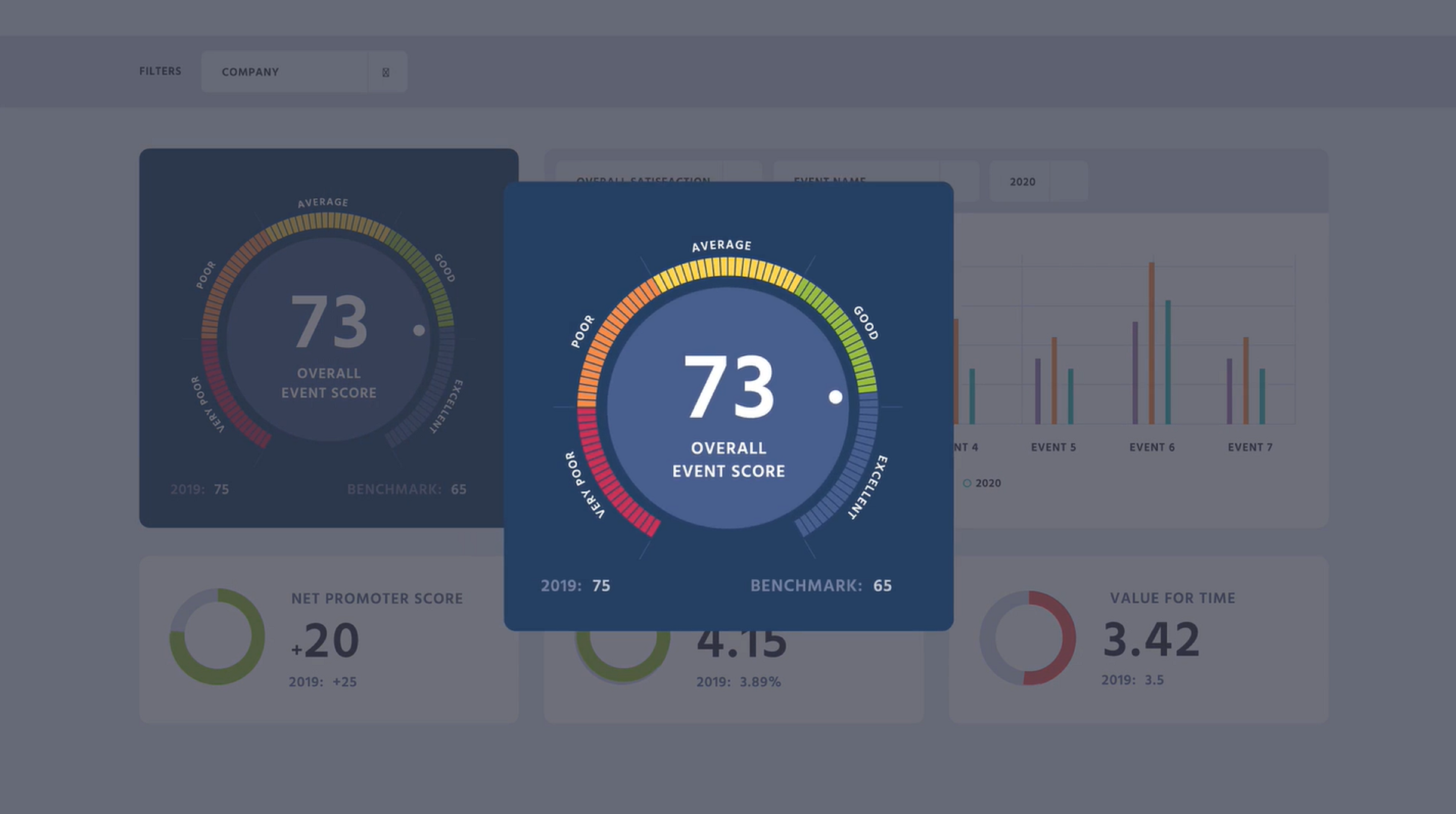
Once the necessary data is gathered through benchmarking, it’s essential to make that information accessible and understandable for key stakeholders within the organization. Explori recommends utilizing visual dashboards to display these performance metrics clearly, enabling quick insights and better decision-making. By integrating this data into an easily digestible format, everyone involved can assess event performance at a glance, fostering a deeper understanding of what works and what needs improvement.
Continuous Growth and Improvement
Ultimately, event success is not a static achievement—it’s a dynamic process that requires ongoing learning and adaptation. Explori’s approach stresses that success in the event world should be seen as a continuous journey, fuelled by data and actionable insights. By embracing data-driven decisions and using benchmarking as a compass for improvement, event professionals can drive consistent growth, refine their strategies, and deliver more impactful events.
Conclusion
To summarize, event success is a multifaceted goal that requires a blend of metrics, benchmarks, and continuous evaluation. With tools like Explori’s survey platform and benchmarking capabilities, event organizers can unlock deeper insights into their event performance, making adjustments that lead to improved results in the future. Success is not just about a number on a scorecard—it’s about using data to shape better events and more meaningful experiences for attendees.
For more information and to explore the power of benchmarking, visit Explori’s detailed insights on What Does Success Mean For Your Event.